Public transport in Toulouse: everything you need to know
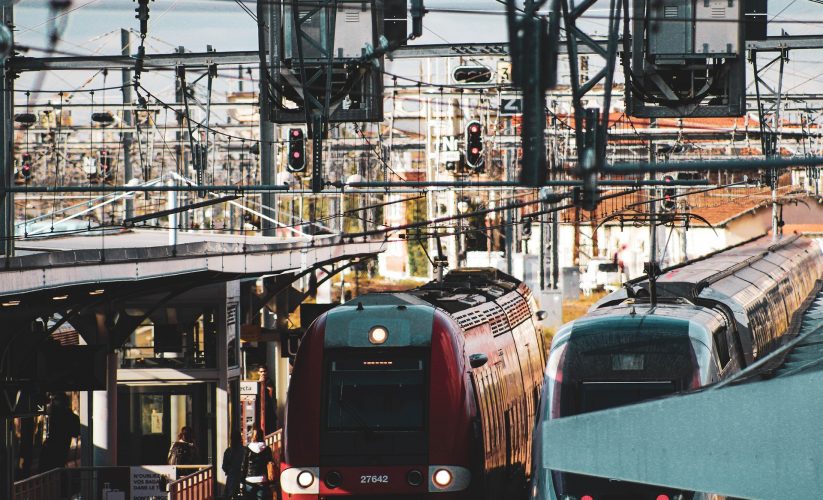
Getting around Toulouse has never been so simple and fast. With a dynamic and constantly improving public transport network, the Toulouse metropolitan area offers many ways to reach the city centre, travel to the west of the urban area, access Matabiau station, catch a TER regional train or get to Toulouse-Blagnac airport. Whether you are a local resident, a new arrival, a student or a visitor in the “pink city”, this guide helps you understand the different modes of transport available, their timetables, fares and the best tips to optimise your journeys.
Public transport in Toulouse is a very comprehensive urban public system: metro, tram, bus, Linéo lines, cable car, special shuttles, as well as connections with SNCF and TER trains. All of these services are grouped under a single network: Tisséo. The key words are: simplicity, fluidity and savings. Here’s everything you need to know!
The Tisséo network: the backbone of mobility in the Toulouse metropolitan area
The Tisséo network covers Toulouse and a large part of the surrounding urban area. It allows you to travel efficiently to neighbouring towns such as Blagnac, Colomiers, Ramonville and Labège. The goal is to quickly connect the key locations in the metropolitan area, whether for work, study, leisure or travel.
The main modes of transport in Toulouse included in the Tisséo network are:
- The metro: fast and frequent, it is the most popular option among Toulouse residents.
- The tramway: ideal for connections to the west, especially Blagnac and the airport.
- Buses and Linéo lines: the most extensive part of the network, reaching every district and town.
- The Téléo cable car: an aerial innovation linking the south-west of the metropolitan area.
- Shuttles: in particular to the airport and certain strategic hubs.
Toulouse continues to invest in its network to support its growth and offer shorter journeys between the main activity centres.
The Toulouse metro: fast, frequent and convenient
The metro is the most widely used mode of transport in Toulouse. Fully automatic, it consists of two lines serving the main areas of the metropolitan area.
Lines A and B: the backbone of the network
Line A crosses Toulouse from east to west.
It connects stations such as Basso-Cambo, Arènes, Esquirol, Jean-Jaurès (interchange), Jolimont and Balma-Gramont. It serves residential neighbourhoods, the city centre and several shopping areas.
Line B runs from the north to the south of the city.
It serves Borderouge, Jeanne-d’Arc, Jean-Jaurès (interchange), François-Verdier, Empalot, the Oncopole and continues as far as Ramonville, in the southern part of the metropolitan area.
The stations Jean-Jaurès and Arènes are key hubs. Jean-Jaurès is where the two metro lines connect, while Arènes makes it easy to transfer to the tramway and buses.
The metro usually operates:
- On weekdays: from around 5:15 a.m. until midnight
- At weekends: extended hours depending on evenings and events
The frequency is very attractive: a metro every 1 to 3 minutes during rush hour. This makes it easy to make quick journeys, even over short distances.
A future line to boost mobility: heading towards Labège
To support the development of south-eastern Toulouse, a future extension is planned towards Labège. This improvement, eagerly awaited by many workers, will make it easier to reach business districts and encourage more sustainable and fluid travel within the metropolitan area.
The tramway: essential for Blagnac, Colomiers and the airport
Introduced to strengthen the west of Toulouse, the tramway complements the existing metro lines. It mainly operates on two routes:
- T1: Palais de Justice ↔︎ Aéroconstellation
- T2: Palais de Justice ↔︎ Toulouse-Blagnac Airport (line T2 has also been operated as a shuttle service at certain times)
The tramway serves in particular:
- Blagnac, a town with strong economic and commercial activity
- Colomiers, the third-largest town in the metropolitan area
- Sites linked to the aeronautics industry (Airbus, airport area)
Journeys are comfortable, with many stops allowing easy access to residential areas, shopping zones, businesses or the airport with direct connections.
Buses and Linéo lines: an extensive network for the whole metropolitan area
While the metro and tramway provide fast links, buses make up the largest share of the network. They cover a wide area, providing connections where the metro does not run.
There are two main types of services:
Regular buses
They run through all districts of Toulouse and nearby towns. Timetables vary depending on the line and the day, with frequencies adjusted to demand (higher on weekdays and on the main routes).
Linéo lines: a reinforced service
Linéo lines are high-level bus services:
- More frequent
- More direct
- Connected to major stations (metro, tramway, train station)
- More comfortable, with shorter journey times
They make it easy to reach places like Colomiers, Ramonville or other towns near the city centre. Linéo lines are often an ideal alternative when the metro is crowded or when your journey is not directly served by lines A or B.
Téléo: an innovative and convenient urban cable car
One of the major new features of public transport in Toulouse is Téléo, a modern urban cable car that crosses the south-west of the city. This aerial solution offers a fast and eco-friendly connection:
Direct route between:
- Oncopole
- Université Paul-Sabatier
- CHU Rangueil
Téléo not only saves time, it also offers unique panoramic views over the city. The service is included in Toulouse’s public transport network, with the same tickets and passes. It is particularly appreciated by students, healthcare staff, visitors and local residents.
SNCF and TER: easy access to other towns in the region
In Toulouse, travel is not limited to the urban network. Connections with SNCF and TER trains make it possible to explore the entire Occitanie region and beyond.
Matabiau station, located in the heart of the metropolitan area and accessible by metro (Marengo-SNCF station), is the main departure point for trains. It provides easy access to many regional and national destinations:
- Albi, Montauban, Tarbes, Foix…
- Bordeaux, Montpellier, Paris…
- And other key towns around Toulouse
To optimise your journey, it is very convenient to combine Tisséo services with train travel, especially thanks to stops close to secondary stations connected to the TER network.
How to buy tickets and manage transport fares?
Tisséo offers different ticketing options to suit everyone’s needs: occasional trips, daily commuting, leisure travel or student journeys.
The main tickets and passes available are:
- Single ticket
- Return ticket
- Book of 10 tickets
- Monthly or annual pass
- Reduced fares for students, schoolchildren, seniors, etc.
Most tickets allow you to combine metro, tram, bus and cable car services for a set period of time (often one hour).
Where can you buy your tickets?
- Ticket machines in metro and tram stations
- Tisséo agencies
- Partner outlets across the metropolitan area
- Tisséo mobile app
- Contactless payment with a bank card (in some stations)
The network is designed to make public transport easy, smooth and modern to use.
Practical tips for travelling around Toulouse
To save time and avoid unexpected delays, here are a few useful tips:
- Use the Tisséo app to check real-time timetables, waiting times and traffic information.
- Avoid rush hours if you can: around 7 a.m.–9 a.m. and 5 p.m.–7 p.m., the metro is very busy, especially between Jean-Jaurès, Arènes and the main university hubs.
- Plan your connections in advance to optimise your travel time.
- To get to the airport, compare journey times depending on your location: tramway T1/T2, shuttle services, taxi or ride-hailing.
- Check the network map to find alternative routes: sometimes a Linéo line can be more efficient than the metro.
For newcomers, students and workers moving to Toulouse, it is often recommended to live close to a metro or tram station: it really makes everyday life easier.
FAQ — Transport in Toulouse
How can I get to Toulouse-Blagnac Airport from the city centre?
The fastest option from the city centre is the tramway via Palais de Justice, or a shuttle service depending on the period. The journey takes around 20 to 30 minutes, depending on connections.
What are the metro operating hours in Toulouse?
The metro usually runs from around 5:15 a.m. to midnight on weekdays, with extended hours at weekends depending on events.
Where can I find the Tisséo network map?
The network map is available on the Tisséo website and app, as well as in metro and tram stations.
Is Téléo included in the public transport network?
Yes, Téléo is fully integrated into Toulouse’s public transport system. The same tickets and passes apply.
Living in Toulouse: finding a well-connected home
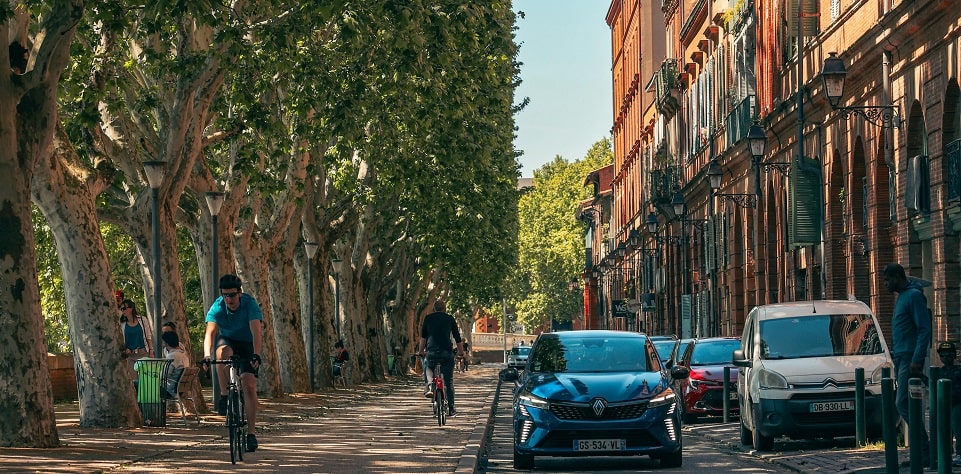
If you are planning to settle in Toulouse and make the most of the city’s mobility options, it is often a good idea to live near a metro, tram or Linéo stop. Well-connected neighbourhoods offer quick access to the city centre, Matabiau station, universities, business districts and other towns in the metropolitan area.
Furnished rentals are often the ideal solution, especially for students, professionals on the move and anyone staying for a medium- or long-term period.
In conclusion
The Tisséo network makes Toulouse one of the best-equipped French cities in terms of public transport. With its automatic metro lines, tramway to the west, buses and Linéo services, Téléo cable car and TER connections at Matabiau, it is easy to travel between districts, the city centre, campuses and towns across the Toulouse metropolitan area.
Whether you are on a business trip, studying at university or spending a weekend in the pink city, public transport of Toulouse will take you wherever you need to go: from the city centre to Arènes, from Blagnac to Ramonville, from Matabiau to Labège. All you have to do is hop on board!
Thinking of staying a bit longer?
Looking for accommodation in Toulouse?
Lodgis offers a wide selection of furnished apartments in Toulouse.
Are you a property owner with a rental in Toulouse?
To learn more about our support services, contact us or visit our dedicated rental management page.
Wondering where to live in Toulouse?
Check out our guide to the city’s most popular neighborhoods.